Resin vs metal vs acrylic dice: which should you buy?
Updated October 27, 2026
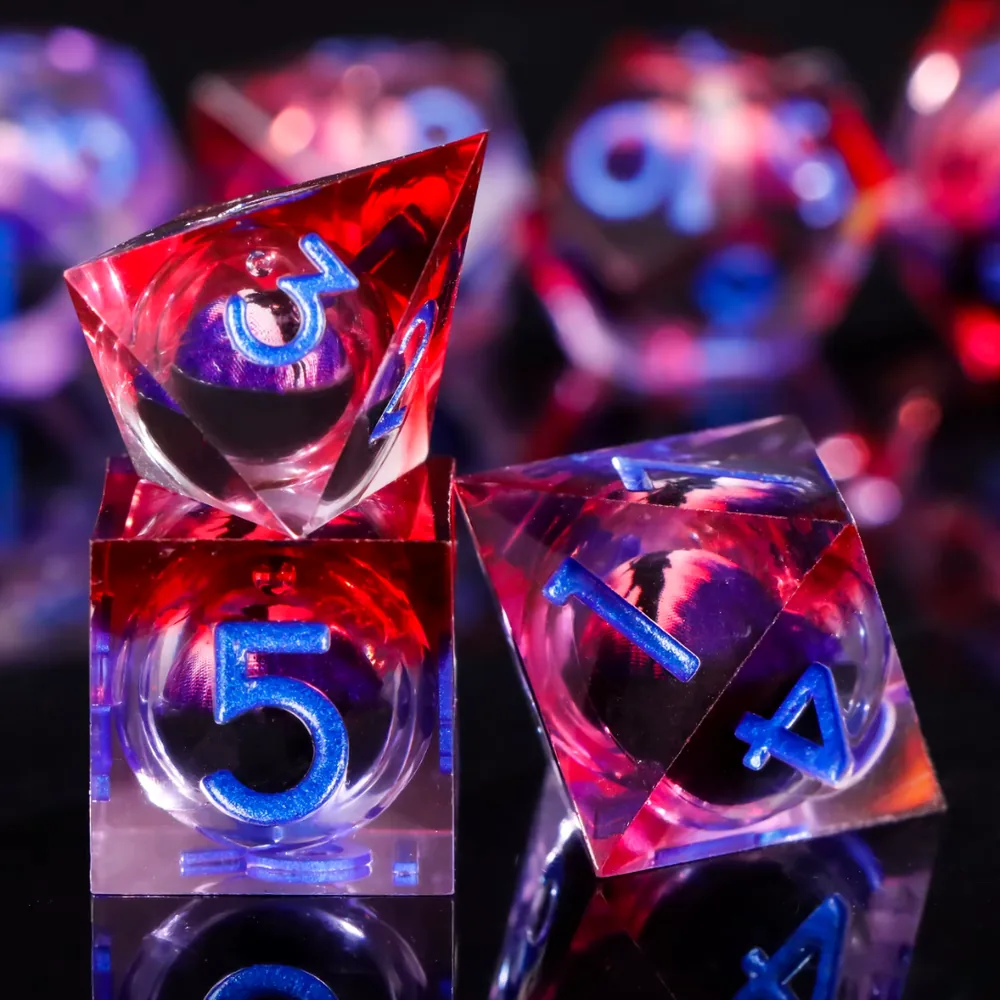
Most tabletop RPG dice are made from one of three materials. Each has real strengths, and the right pick depends on how you play and what you want your dice to feel like.
Acrylic dice
Acrylic is what most starter sets are made of. The dice are light, tough and inexpensive, with rounded edges that survive being dropped. The tradeoff is that they look fairly plain, and the rounded edges make them roll a long way across the table.
Good for: beginners, big groups that share dice, and anyone who wants a bag of spares.
Resin dice
Resin is poured into molds, which lets makers set things inside the dice: flowers, glitter, or a liquid core with a floating dragon eye. Resin dice are usually clear, so the numbers and the inside both show. Many have sharp edges, which look crisp and stop rolling sooner.
The tradeoff is care. Sharp resin edges can chip on hard surfaces, and liquid core dice should be kept out of freezing temperatures. A tray or mat solves most of this.
Good for: players who want dice that feel like part of their character, and anyone buying a gift.
Metal dice
Metal dice are heavy, cold to the touch and very satisfying to roll. They last forever, but they can dent wooden tables and chip other dice, so a padded tray is a must. They're usually the priciest option.
Good for: players who love weight and want one set for life.
Quick comparison
- Looks: resin is the most varied, metal is the most polished, acrylic is the simplest.
- Weight: metal is heaviest, resin is in the middle, acrylic is lightest.
- Durability: metal and acrylic are the toughest; sharp edged resin needs a tray.
- Table friendly: acrylic and resin are gentle; metal needs a padded tray.
Are fancy dice fair?
Any handmade style can roll slightly less evenly than precision casino dice. For home games that rarely matters. Our guide on whether liquid core dice are balanced covers what one large test found.